Can you build a six-figure e-commerce business selling products you don’t even use yourself? Let’s find out.
A year and a half ago, today’s guest was working a day job in digital marketing, feeling like he was always building somebody else’s business.
Sound familiar?
He decided to change that by launching an e-commerce store, and now he’s doing over $120,000 in monthly sales.
Phil McEleney from Camper Nation(opens in new tab) followed the traditional path of good grades, a good university, and a solid corporate job. But hitting 30 in a middle management role got him thinking about the next 30 or 40 years of his life, chained to an office and a commute.
That’s when he decided to build something of his own, one that could become a real, sellable asset.
He landed on camper van and motorhome accessories in the UK market, not because he’s a “van lifer” himself, but because the data pointed him there.
Within 18 months of dropshipping high-ticket products(opens in new tab), he took the business to $40,000 a month while still working his day job, and has since grown it well beyond that.
Tune in to Episode 758 of the Side Hustle Show to learn:
- how to pick a high-ticket e-commerce niche using search volume and competitor data
- how to get approved as an authorized reseller without any sales history
- how a 3-tiered Google Shopping ad strategy targets buyers who are ready to purchase
Curious about this business model? Check out the free on-demand e-commerce training(opens in new tab) from Dropship Breakthru(opens in new tab). (Phil went through their program to get started.)
Sponsors
- Quo (formerly OpenPhone)(opens in new tab) — Try it for free!
- Shopify(opens in new tab) — Sign up for a $1 per month trial!

- Gusto(opens in new tab) — Get 3 months free of the leading payroll, benefits, and HR provider for modern small businesses!

- Indeed(opens in new tab) – Start hiring NOW with a $75 sponsored job credit to upgrade your job post!

- Monarch(opens in new tab) — Get an extended 30-day free trial!

Why Phil Chose High-Ticket E-Commerce
Phil wanted something he could run on evenings and weekends without quitting his job right away.
Working backward from the income he wanted, he realized he’d need to sell a huge volume of cheap products to make real money, or a smaller volume of expensive ones.
He decided to go after products retailing for $1,000 or more, where a single sale could net anywhere from $150 to a few thousand dollars in profit.
As he put it, “You’ve got to sell a lot of $10, $15 products to make the sort of money that’s going to ultimately replace your income.”
How to Find a High-Ticket Niche
Phil used a data-led process instead of chasing a personal hobby (He’s part of Dropship Breakthru(opens in new tab) and Jayden Clark’s 1% Ecom Club(opens in new tab))
- Find a person, not a product – Someone passionate enough to buy multiple products from you over time.
- Check search volume – In Ubersuggest(opens in new tab), add up the broad category terms — for saunas: “sauna,” “outdoor sauna,” “infrared sauna.” Target 20,000+ monthly searches combined.
- Count direct online competitors in Google Shopping(opens in new tab) — other online-only sellers, not Amazon(opens in new tab) or big-box. He wants some (proof it works), but under roughly 20 in the US.
- Specialised, not famous – Something a buyer would normally visit a specialist store for, from a brand with recognition. Not Sony TVs or Nike trainers.
- Local suppliers only – domestic shipping in days, not containers in months.
- Avoid DTC brands. They’re the ones who won’t let resellers bid on their branded terms.
- Need 10+ potential suppliers, so a few rejections don’t sink it.
- Tie-breaker: check price consistency among existing sellers. Wild variation means a race to the bottom.
Other niches he considered and passed on included wellness products like saunas and cold plunges (too competitive), man-cave items like pool tables and jukeboxes (too many DTC brands), and home gym equipment.
How to Get Approved as a Reseller
Once Phil settled on a niche, he built a basic website(opens in new tab) with a homepage, some content, and demo products before contacting suppliers.
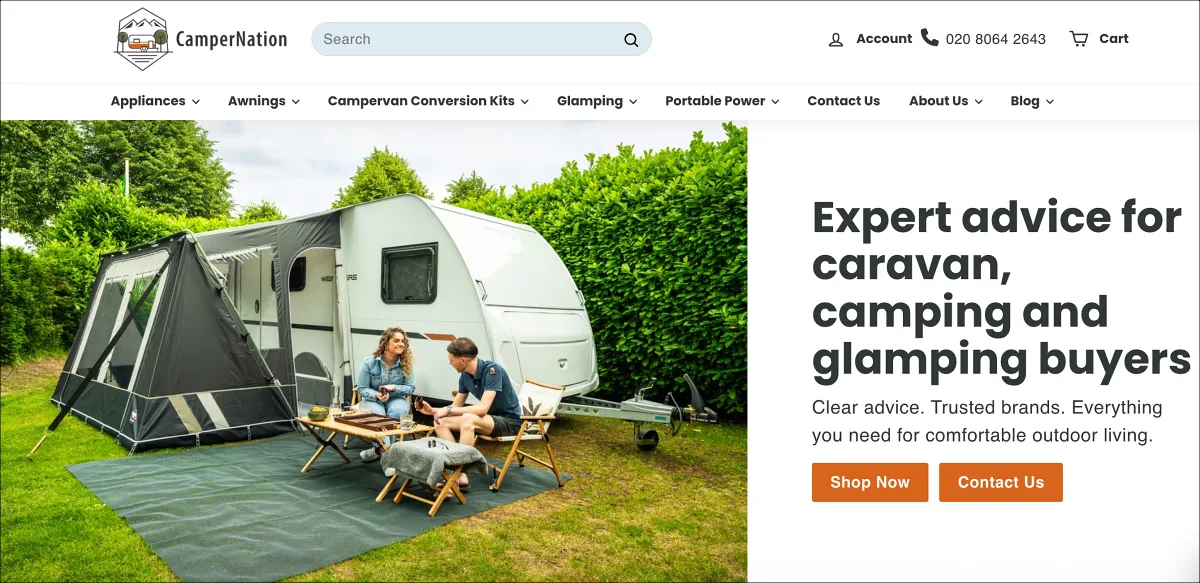
- Most suppliers have a dealer or authorized retailer application on their site. Fill it in.
- Where they don’t, call and ask for a sales manager.
He found suppliers surprisingly open to the arrangement since it’s mutually beneficial. As Phil explained, “You’re gonna be their best customer because… you will pay for every order before it ships.”
No credit terms, no risk to the supplier, and Phil handles everything on the sales side.
Out of roughly 20 suppliers he contacted, 4 said yes, which was enough to launch the site. He suggests looking for niches with at least 10+ potential suppliers so you’re not stuck if a few say no.
How the 3-Tiered Ad Strategy Works
Phil’s traffic starts entirely with Google Shopping ads(opens in new tab), which pull product images, names, and prices directly from the site with no creative work required.
He avoids Google’s automated Performance Max(opens in new tab) option in favor of manual campaign setup.
The setup uses three shopping campaigns representing: upper, medium, and bottom funnel intent.
Since shopping ads can only use negative keywords (not exact-match targeting), so:
- Bottom- and medium-funnel terms are excluded from the upper campaign
- Bottom-funnel terms are excluded from the medium campaign
- High-intent searches get pushed down into the bottom campaign, where Phil bids hardest
Bids vary wildly by funnel stage. Generic top-of-funnel terms might cost 2 to 5 pence per click, while highly specific, ready-to-buy searches can cost up to £5 per click, typically landing somewhere between £1 and £3.
Gross margins on his products run 15% to 40%, with items closer to the $1,000 mark typically landing around 25-30%, which gives him room to profitably acquire that expensive traffic.
What Makes Customers Choose You Over a Competitor?
Since many suppliers don’t enforce minimum advertised pricing (MAP) in the UK, multiple sellers often list the same product at the same price.
Phil competes by building out his “offer” instead of price.
100-Day Returns
Camper Nation advertises a 100-day returns window, far beyond the industry standard, which he says drives more incremental sales than it costs in returns.
Phil said that out of 1,200 to 1,500 orders in 18 months, Camper Nation has had only around 12 returns.
A Phone Number, Answered
He also emphasizes getting customers on the phone.
Early on, he answered calls himself even without knowing every product spec, telling customers he’d check with his supplier and call back rather than guessing.
That responsiveness, plus having a real phone number on the site, built trust and drove sales.
How Organic SEO Took Over From Paid Ads
Paid traffic got Camper Nation off the ground, but Phil says organic search has become one of the biggest levers for growth.
He uses a method called Avalanche SEO, which groups sites into traffic tiers based on daily organic visitors:
- Tier 0: 0-10 visitors
- Tier 1: 10-20 visitors
- Tier 2: 20-50 visitors
- and so on…
The idea is that Google will only rank you for keywords matching your current tier, so a brand-new site has no shot at ranking for a broad, high-volume term like “sauna.”
Instead, Phil targets overlooked informational content:
- buying guides
- comparison posts
- and specific questions people search around a product category.
He finds these using Answer the Public(opens in new tab), typing in a product category to surface real questions people are asking on Google(opens in new tab), YouTube(opens in new tab), and AI platforms(opens in new tab).
Building dozens of these lower-competition articles gradually builds a traffic base that lets the site compete for bigger terms over time.
Free Keyword Research You Can Do Tonight
Phil’s underrated favorite keyword research tool is Google itself:
- Read the autocomplete predictions for your category
- Prefix it with what, how, if, why and read those too
- Work the alphabet — “sauna a,” “sauna b,” “sauna c”
- Mine People Also Ask and People Also Search For
You get real search data, straight from the source. An hour can produce a month of content ideas. “That was my Friday nights at times.”
He wrote the early articles himself; now a Fiverr freelancer follows a detailed SOP — two AI tools layered, then a human pass for readability and accuracy — at a few dollars an article.
Tools/Tech
- Ubersuggest(opens in new tab) — keyword and search volume research
- Google Shopping ads(opens in new tab) — bottom-funnel product advertising
- Answer the Public(opens in new tab) — finding informational keyword opportunities
- Fiverr(opens in new tab) — outsourced content writing following a set SOP
- Shopify(opens in new tab) — e-commerce store platform
A Day In His Life
There’s a small team behind him now. First thing offloaded: customer service — the “where’s my order” work — to a VA.
Phil keeps the ads and the larger sales projects. Everything from the point of sale onwards is off his plate unless only he can make the call.
Mistakes to Avoid
Phil admits he underestimated how much people would trust an unknown website to spend serious money.
Looking back, he’d have gone even higher-ticket than he did, since the more pre-sale questions or complications a product has (installation, sizing, and so on), the more opportunity a seller has to add value and win the sale instead of just competing on price.
He also learned the hard way that logistics can fall apart fast.
Two days before a scheduled installation, Camper Nation’s national installation partner pulled out of every project, forcing Phil to scramble and find local installers to cover the job.
What’s Next for Phil?
Camper Nation started as a pure dropshipping operation but has since moved into holding stock on its best-selling SKUs, which improves margins and reduces reliance on supplier logistics.
Next, Phil wants to get some of his own branded products manufactured, aiming to release a proprietary product line sometime in the next year.
Phil’s #1 Tip for Side Hustle Nation
“Don’t let revenue cloud your judgment. Focus on profit.” As Phil added, “Revenue feeds the ego and profit feeds the family.”
Episode Links
- Camper Nation(opens in new tab) – phil@campernation.co.uk(opens in new tab)
- Ubersuggest(opens in new tab)
- Answer the Public(opens in new tab)
- Fiverr(opens in new tab)
- Shopify(opens in new tab)
- Episode 704 — Holly Finnefrock on high-ticket dropshipping(opens in new tab)
- Episode 736 — Jayden Clark(opens in new tab)
- 1% Ecom Club(opens in new tab)
- Dropship Breakthru(opens in new tab)
- Dropship Breakthru’s free on-demand e-commerce training(opens in new tab)
- hustle.show(opens in new tab)
- sidehustlenation.com/deals(opens in new tab)
Looking for More Side Hustle Help?
- Start Your Free $500 Challenge(opens in new tab). My free 5-day email course shows you how to add $500 to your bottom line.
- Join the free Side Hustle Nation Community(opens in new tab). The free Facebook group is the best place to connect with other side hustlers and get your questions answered.
- Download (opens in new tab)The Side Hustle Show(opens in new tab). My free podcast shares how to make extra money with actionable weekly episodes.
The award-winning Side Hustle Show is the #1 side hustle podcast
with over 1,300 5-star ratings!

Listen in your favorite podcast app or directly in your browser.