Can you really make money on Instagram? Yes, and you don’t need a huge following to get started.
Instagram has more than 3 billion monthly users, and it’s where a lot of people discover the products, local businesses, and creators they end up paying.
The best ways to make money on Instagram are creating UGC for brands (no followers required), selling your own products or local services, and landing brand deals once you’ve built a niche audience. Instagram’s own payouts, like Subscriptions and Gifts, are a nice bonus but rarely the main event.
Here’s my guide to 13 ways to make money on Instagram, with real examples from Side Hustle Show guests and current pay rates. Comparing platforms? Here’s how to make money on Facebook and the most popular TikTok side hustles.
| Your Audience | Best Ways to Earn | Realistic Earnings |
|---|---|---|
| No followers | UGC, social media management, running ads | $15 to $100+ an hour, or about $1,500 a month per ads client |
| A local following | Local services, your own products | Up to $10,000 a month (window washing example) |
| 1,000 to 10,000 | Brand deals, affiliate links, digital products | $100 to $500 per sponsored post or Reel |
| 10,000+ | Bigger brand deals, Subscriptions, a membership or course | $500 to $2,500+ per post or Reel |
1. Create UGC for Brands
Followers needed: None
UGC (user-generated content) creators get paid to make short, authentic-looking videos that brands post on their own accounts and run as ads.
Since the brand is paying for the video and not your audience, you don’t need any followers. That’s how Megan Collier built a six-figure UGC side hustle.

Megan started with nothing but a willingness to DM brands. She’d scroll the ads in her Instagram feed, follow the brand, and send a short message asking to be connected with whoever handled partnerships.
Ten days later, she landed her first deal for $750!
Later, one home products brand paid her $3,000 a month for 15 to 20 Instagram Reels, and those were product-only videos with no face needed. At her peak, she was earning $10,000 to $13,000 a month while still working her day job.
To get started, film 3 to 5 sample videos with products you already own and put them in a simple portfolio you can send with your pitches.
2. Become a Social Media Manager
Followers needed: None
Lots of small business owners know they should be posting on Instagram, but they don’t have the time (or the patience) to do it.
You can take that off their plate by planning, creating, and scheduling their posts. Social media freelancers usually charge $15 to $50 an hour, and experienced managers can earn $100 an hour or more, according to our guide to in-demand freelance skills.
Many freelancers sell this as a monthly package, like three posts a week. Canva makes it easy to turn out on-brand graphics fast. (Here are more ways to make money with Canva.)
To land your first client, look at the businesses you already buy from. How could their Instagram be better? Make a few sample posts and send them to the owner, or list your services on Fiverr.
3. Run Instagram Ads for Businesses
Followers needed: None
Instagram ads run through Meta’s ad platform, and plenty of business owners would rather pay an expert than learn it themselves.
Brien Gearin taught himself Facebook ads and built a six-figure digital marketing agency on the side. As a ballpark, he charges $1,500 a month to manage Facebook and Instagram ads for a client.
It took Brien 11 months to land his first client, but he kept learning and eventually hit his goal of $6,000 a month. A handful of clients on retainer adds up fast!
Local service businesses are a great place to find your first clients, since a few new jobs can easily cover your fee. Here’s what that looks like in action.
4. Promote Your Local Service Business
Followers needed: None, just a local audience
Instagram can be a powerful marketing tool for a local business, even if you’re starting from zero.
When knocking on doors wasn’t working, college student Jack Leimbach turned to Instagram for his window washing business. He spent just $600 on hyper-local ads with a personal touch: “Hey, Auburn… there’s an epidemic of dirty windows in Auburn.”
The ads brought a flood of messages and a schedule full of jobs. When we covered his story, the business was bringing in $10,000 a month.
You don’t have to run ads, either. Tayo Lanlehin started an Instagram page to rent out kid-sized tables and chairs she stored in her basement. Four years later, it had grown into a $295,000 kids party rental business.
Post before-and-after photos, short videos of you at work, and happy customer reviews. Then make it easy to book with a clear call to action, like Jack’s “Send me a message for a quote.”
5. Sell Your Own Products
Followers needed: Helpful, but you can grow as you go
Instagram is a visual platform, so it’s a natural fit for products that look good in photos and videos.
Jenn Fei uses Instagram as the main marketing channel for her custom cookies. She charges $50+ per dozen and routinely sells out within minutes of a new release.
Charlotte Liebling went even bigger with Loved Before, her secondhand stuffed toy business. Each toy gets its own name and backstory, and she shares “spa day” videos showing the cleaning process. Loved Before has grown to 200,000+ Instagram followers with zero marketing spend.
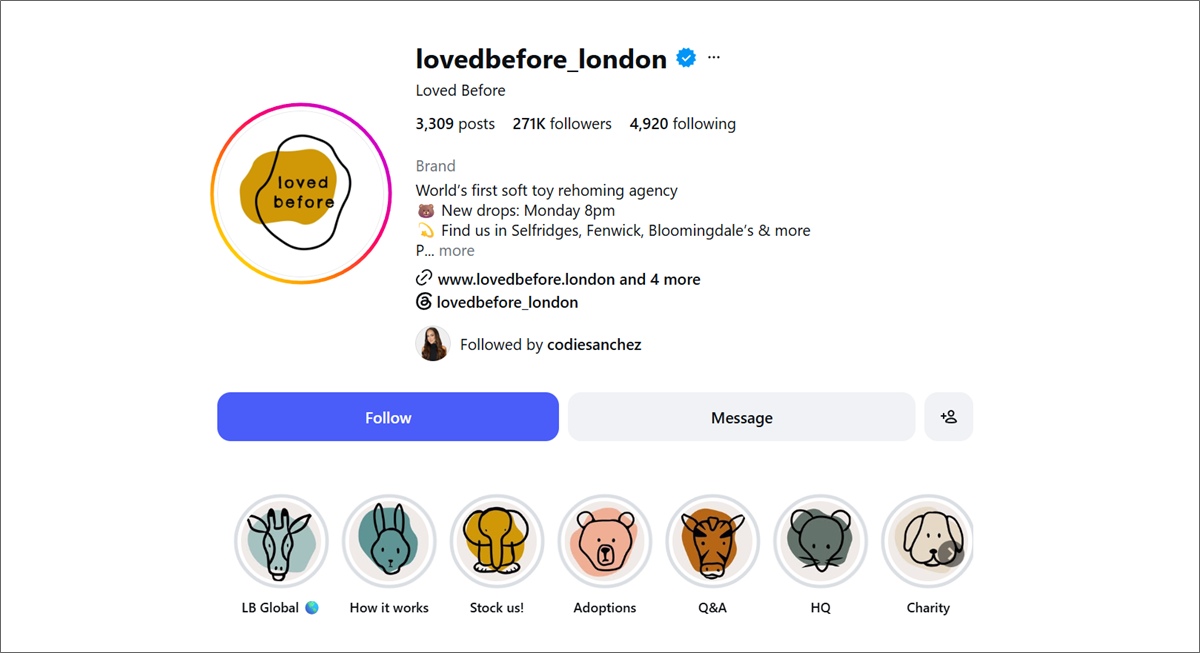
Before selling anything, Charlotte started a separate Instagram account just to test whether people connected with the idea. That’s a smart, free way to validate a product before you invest in it.
6. Sell Digital Products
Followers needed: Helpful, but not required
Digital products like printables, planners, templates, and guides are a great fit for Instagram since there’s no inventory and you can sell the same file over and over.
Use your posts to show the product in action, then send people to your Etsy shop or a link-in-bio storefront like Stan.
If you’re a designer, you can also sell Canva templates made for Instagram, like post templates, Reel covers, and story highlight icons. Other creators and small businesses buy them to save time.
Want to start on Etsy? Here’s how to sell printables on Etsy, plus why mini digital products make a great first offer.
Etsy Printables
Create something once, sell it over and over again on autopilot. That’s the dream of a printable digital product business.
This free guide to seasonal product ideas will get your creative juices flowing on what you could sell.

7. Build a Faceless Niche Account
Followers needed: None to start
Don’t want to show your face? You don’t have to.
Plenty of Instagram accounts are built around a topic instead of a personality, like recipes, home organization, travel tips, product reviews, or how-to videos where only your hands are on screen.
Once your account grows, you can make money from it with affiliate links, digital products, or brand deals. The same idea works on YouTube, where faceless YouTube channels can earn $10,000+ a month.
8. Land Brand Deals and Sponsored Posts
Followers needed: About 1,000+
Brand deals are what most people picture when they think of making money on Instagram: a company pays you to feature its product in a post, Reel, or Story.
How much can you make? Here are the typical rates from Later’s 2026 influencer pricing benchmarks:
- Nano creators (1,000 to 10,000 followers): $100 to $300 per feed post and $200 to $500 per Reel
- Micro creators (10,000 to 100,000 followers): $500 to $1,500 per feed post and $800 to $2,500 per Reel
- Macro creators (100,000 to 1 million followers): $2,500 to $10,000+
The good news is follower count isn’t everything. Brand deal expert Justin Moore says brands care more about reaching the right audience, which is how creators land brand deals with a small audience.
His tips for finding your first partners:
- Look for existing partnerships. Check other creators in your niche for #sponsored or #ad posts to see which brands already pay for content.
- Survey your audience. Ask what products they use, then pitch the brands that come up most.
- Find the decision maker. Search Google for the brand name, a job title like “influencer marketing manager,” and “LinkedIn.”
You can also join Instagram’s Creator Marketplace from your professional dashboard so brands can find you and send partnership offers. You’ll need a creator or business account and be at least 18.
At the bigger end, Side Hustle Show guest Alan Donegan’s brother grew his triplets’ Instagram account to 400,000 followers, and now hotels and brands pay for sponsored trips and content.
Just be sure to label sponsored posts with Instagram’s “Paid partnership” tag or #ad.
9. Earn Affiliate Commissions
Followers needed: Fewer than you’d think
With affiliate marketing, you earn a commission when someone buys a product through your link.
The Amazon Influencer Program is one of the easiest places to start. You apply with your social media accounts, including Instagram, and there’s no official follower minimum. Amazon influencer coach Nate Jackson says he’s seen people get approved with as few as 3 followers!

Once you’re in, you get your own Amazon storefront to share, and you can earn commissions on product review videos that show up right on Amazon’s product pages. Nate went from a brand-new account to earning up to $20,000 a month with the Amazon Influencer Program.
Amazon Influencer Program
4.5
Upload brief product review videos and get paid every time you help Amazon make a sale.
- Easy to get started.
- Videos can earn passive income.
- No outside marketing needed.
- Program guidelines aren’t super clear.
- Commission rates are low.
- You might run out of products to review.

Plenty of other brands run their own affiliate programs, especially in fashion, beauty, fitness, and software. Here’s my guide to affiliate marketing for beginners.
One catch is that Instagram doesn’t make links in captions clickable. That’s why many creators use ManyChat to automatically DM a link to anyone who comments a keyword like “LINK.”
10. Sell a Membership or Online Course
Followers needed: Helpful, but you can grow as you go
If you have expertise or a unique idea people want, Instagram can feed a course, coaching program, or membership. This is where some of the biggest incomes on this list come from.
Cheyenne from Domestic Daydreams set up her public domain podcast membership in a single weekend on Kajabi. Then she started a dedicated Instagram account and posted a Reel every day. Within a month, the account had 25,000 followers!
Members pay $25 a month or $45 a quarter for private podcast episodes that mix old radio shows with cleaning routines. Within about a month, the membership was covering all her expenses, including her mortgage.
Katherine O’Brien took a different route. After building a successful ice cream bike business, she launched Bike Business University to teach others how to do the same.
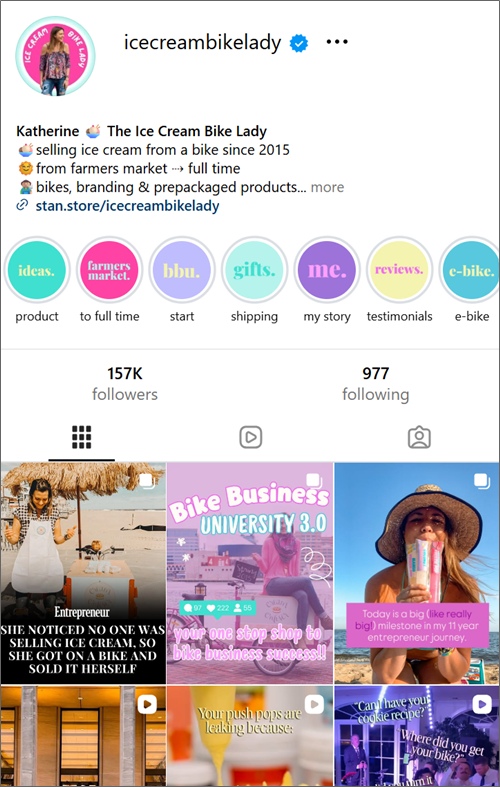
When we covered her story, her @icecreambikelady account had 82,000 followers, and the course was averaging $20,000 a month.
Not sure which model fits you? Here’s a breakdown of memberships vs. online courses.
11. Turn On Instagram Subscriptions
Followers needed: Usually 10,000+
Instagram Subscriptions let your followers pay a monthly fee for subscriber-only content like Reels, Stories, and live videos, plus a badge next to their name.
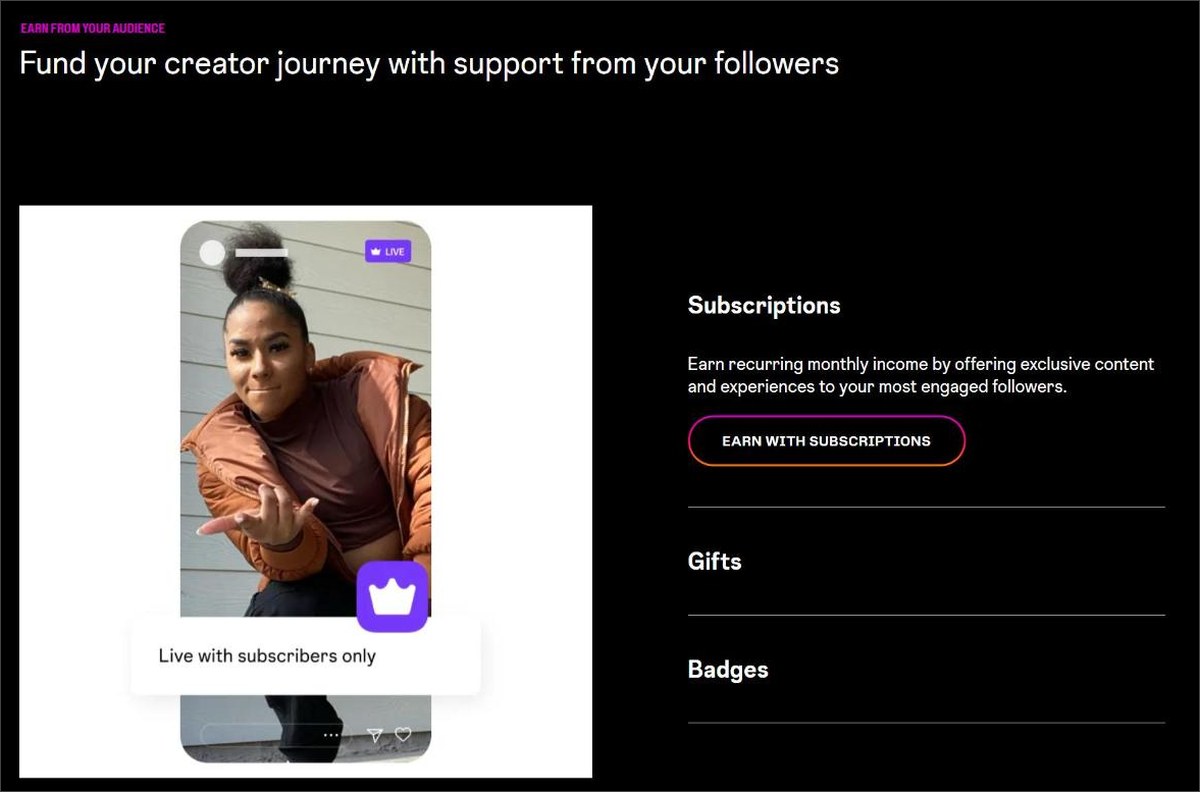
You’ll need a professional account, be at least 18, and live in an eligible country. The most common follower requirement is 10,000+, according to Influencer Marketing Hub, and you can set your price anywhere from $0.99 to $99.99 a month.
Instagram currently doesn’t take a platform fee, but Apple and Google charge app store fees of about 30% on in-app subscriptions.
So how much can you make? If 100 followers subscribe at $4.99 a month, that’s about $500 a month before fees. It works best when you already have loyal fans who want more from you.
12. Collect Gifts, Badges, and Bonuses
Followers needed: Varies
Instagram has a few more built-in ways to earn, listed on its creator earnings page:
- Gifts: Fans buy “stars” to send you on your Reels, and you get $0.01 per star. So 500 stars is worth $5.
- Badges: Viewers can buy badges during your live videos to show their support.
- Bonuses: Invite-only payments based on how your Reels, carousels, and photo posts perform.
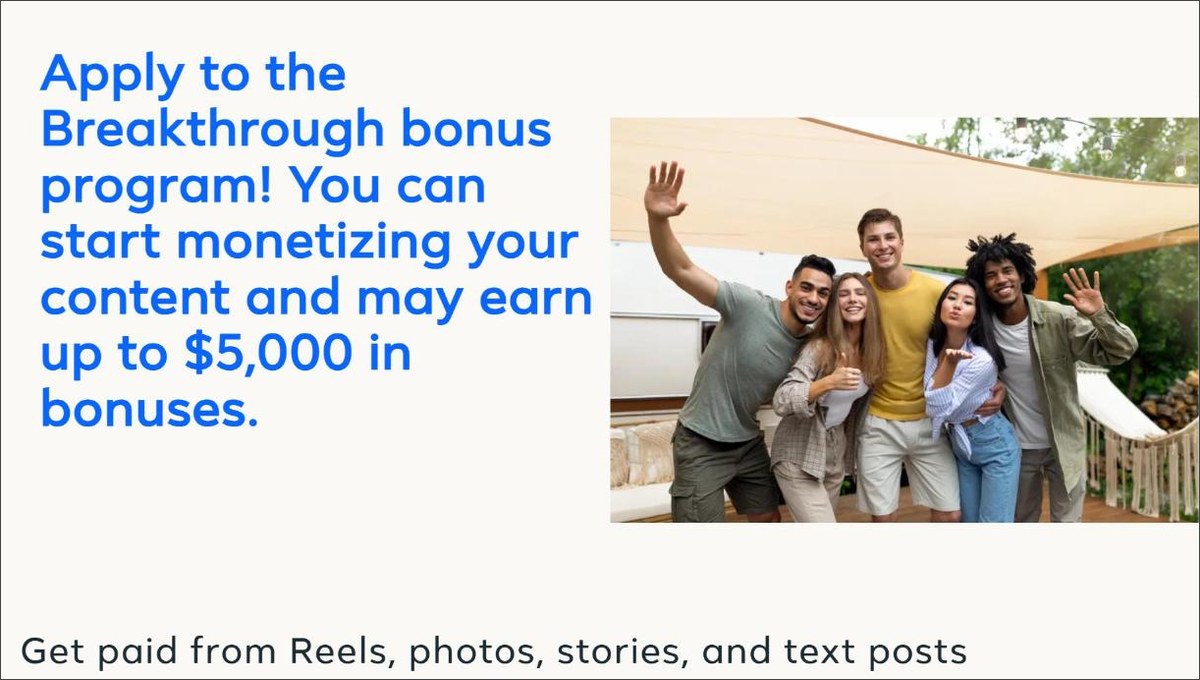
Meta also runs a Breakthrough Bonus for U.S. creators who haven’t made money on Instagram or Facebook before. It pays up to $5,000 in bonuses during your first 90 days, and creators with 20,000+ followers on another app get priority.
Just don’t count on these as your main income. Instagram’s old Reels Play bonus went away in most markets in 2023, and programs like these can change anytime.
13. Build Your Email List
Followers needed: Any
This last one isn’t a way to get paid directly, but it might be the most important item on the list.
You don’t own your Instagram followers. One algorithm change or hacked account can wipe out your reach overnight, so it’s smart to move fans to an email list you control.
Ryan Sneddon learned this lesson with Naptown Scoop, his local newsletter business. He had 22,000 Instagram followers, more than his 18,400 email subscribers. But in the year before we spoke, Instagram brought in only about $3,000, while the newsletter made around $170,000!
That’s why Cheyenne sends every Instagram post to a free lead magnet instead of straight to her sales page. When someone comments a keyword, ManyChat DMs them the opt-in link, and her list has grown to about 30,000 subscribers in two years.
You can start a list for free with Kit. Here are more ways to build your email list fast.
How to Grow an Instagram Account That Makes Money
The creators above didn’t go viral by luck. Here’s what worked for them:
- Pick a niche. Brands pay more to reach a specific audience, and it’s easier to sell when your followers share the same problem.
- Post Reels often. Cheyenne posted a Reel every day and found that quantity leads to quality. Some posts she threw together went viral, while others she spent a week on flopped.
- Tell stories instead of selling. Charlotte’s toys each have a name and backstory, which turns her posts into something people want to follow.
- Look outside your niche for ideas. Cheyenne saves video formats she likes from other niches, so her content doesn’t look like her competitors’.
- End every post with a next step. Ask people to comment a keyword for a freebie, message you for a quote, or tap the link in your bio.
Serious About Making More Money?
- Start Your Free $500 Challenge. My free 5-day email course shows you how to add $500 to your bottom line.
- Join the free Side Hustle Nation Community. The free Facebook group is the best place to connect with other side hustlers and get your questions answered.
- Download The Side Hustle Show. My free podcast shares how to make extra money with actionable weekly episodes.
The award-winning Side Hustle Show is the #1 side hustle podcast
with over 1,300 5-star ratings!

Listen in your favorite podcast app or directly in your browser.




Frequently Asked Questions
How many followers do you need to make money on Instagram?
You don’t need any followers for UGC, social media management, running ads for businesses, or promoting a local service, since you’re not selling access to an audience. For brand deals, about 1,000 followers in a clear niche is enough to start, while Instagram Subscriptions usually require 10,000+.
Does Instagram pay you for views?
Not for most creators. Instagram doesn’t have an open, per-view payout program like YouTube’s ad revenue share. Instead, it offers invite-only bonuses based on how your posts perform, plus Gifts, where fans send you stars worth $0.01 each.
How much do Instagram influencers make?
It depends on your audience size and niche. According to Later, nano creators with 1,000 to 10,000 followers typically earn $100 to $500 per sponsored post or Reel, micro creators with 10,000 to 100,000 followers earn $500 to $2,500, and bigger accounts can charge $10,000 or more. Many creators earn more from their own products, memberships, and affiliate links than from sponsorships.
Can you make money on Instagram without showing your face?
Yes. You can create product-only UGC videos, build a faceless niche account with voiceovers or hands-only videos, or work behind the scenes as a social media manager. Megan Collier earned $3,000 a month from one brand for product-only Reels with no face on camera.
How do you get paid on Instagram?
Brands usually pay you directly for sponsored posts and UGC, often through an invoice or a platform like PayPal. Instagram’s built-in features, like Subscriptions and Gifts, pay out to the payout account you set up in your professional dashboard. Affiliate programs like Amazon pay commissions on their own schedule.