
What if the “side hustle economy” isn’t new at all, but just the latest chapter in a 300-year-old story?
My guest today is a historian, early retiree, and real estate investor who turned his research into a book packed with lessons from America’s financial past.
Dr. Joseph Moore, from HistoryHelps.com, is the author of How to Get Rich in American History: 300 Years of Financial Advice That Worked (& Didn’t).
Joseph’s own side hustle story took a wild turn. He set out to buy a house with no money down and came home with a 3-bedroom house and a fourplex. Before long, the FBI got involved: his renters turned out to be human traffickers. Meanwhile, a hoarder in the fourplex pulled a shotgun on him.
Rather than quit, he leaned in, eventually building a portfolio of more than 40 properties before cashing out of his career as a history professor.
Tune in to Episode 770 of the Side Hustle Show to learn:
- how “boarding,” the 1800s version of house hacking, helped 1 in 3 American homeowning families pay their mortgage
- the 3-step framework of limitation, concentration, and diversification for building and protecting wealth
- why geographic mobility is one of the most overlooked wealth-building levers today
Sponsors
- Freshbooks.com – Get 90% off your first 4 months!

- Shopify — Sign up for a $1 per month trial!

- Gusto — Get 3 months free of the leading payroll, benefits, and HR provider for modern small businesses!

- Indeed – Start hiring NOW with a $75 sponsored job credit to upgrade your job post!

- Monarch — Get an extended 30-day free trial!

Round 1: 300 Years of Side Hustle Advice
Side Hustles Are Nothing New
Americans have been hustling since the founding of the country.
Historical side hustles included:
- Good Housekeeping magazine, dating back to the 1800s, used to run annual prize essays on the best ways to earn side income, and the winning entry was often something like raising chickens to sell eggs at market.
- Churning butter, which at one point accounted for roughly $1 out of every $4 a farm earned, especially in upstate New York.
- Weaving straw hats to sell for $1 to $2 each.
Back then, this patchwork of extra income streams was called the “task economy.”
The 40-hour workweek and the idea that one job should define your income is actually the unusual, recent development, Joseph argues. It emerged after World War II, when factory jobs were plentiful.
Before that, and now again today, piecing together income from several sources was the norm, not a sign the economy was broken.
House Hacking Is a 100-Year-Old Mortgage Strategy
Renting out extra rooms, what we now call house hacking or Airbnb-ing a spare room, was historically the number one mortgage payoff strategy in America.
Immigrant families in cities like New York were commonly advised to buy a house and immediately rent out the extra rooms, often paying down the mortgage within 8 to 10 years.
At its peak, 1 in 3 homeowning families was renting out rooms at any given time, and about half of all American homeowners had done it at some point.
In Pittsburgh, families renting to steel mill workers added 20% to 30% to their household income. Among Lithuanian immigrant families in the 1910s, 70% rented out rooms.
The practice faded for two reasons:
- Post-World War II home construction solved much of the housing shortage
- Political backlash (driven partly by xenophobic fearmongering in the 1910s and ’20s) led cities to pass laws restricting room rentals.
Real Estate Lessons from a Rocky Start
Joseph’s real estate run began as an experiment to buy a house with no money down. He ended up with a 3-bedroom house and a fourplex, funded largely by pulling from his retirement account.
After the chaos of the human trafficking incident and the shotgun confrontation, he got serious about learning the business, treating it as active work rather than passive income.
He bought in right after the 2008 crash, when houses were cheap but banks were terrified to lend, so he had to get creative with financing.
At his peak, he owned more than 20 properties at a time and has owned more than 40 total over the years. Today he’s down to 5, a deliberate choice once the stress outweighed the financial upside.
As he put it, “I’ve made the money I wanted to make.”
The 3-Step Framework: Limitation, Concentration, Diversification
Joseph’s biggest takeaway from 300 years of financial advice is a sequence:
- Limit your focus to one thing you can excel at.
- Concentrate on getting better at it than almost anyone else.
- Diversify to protect what you’ve built once you’ve won that game.
Andrew Carnegie is the classic example, famously advising young men to put all their eggs in one basket and then watch that basket closely. But the right order depends on where you’re starting.
For someone without an obviously high-upside skill, Joseph described a woman in HR who knew she’d never climb much further in her field.
Instead, she used her free time to side hustle her way to paying off her house and car, so her existing salary now covers far less and she has more flexibility to take new opportunities.
The lesson: your side hustle can become your concentration. Joseph pointed to someone who started cutting down trees as a side hustle out of genuine passion and now runs a fully booked business with crews and millions of dollars in equipment.
Why Moving Matters More Than You Think
Americans used to be far more mobile. In the late 1800s, 1 in 3 people changed addresses every year. By the 1950s, it was 1 in 5. Today it’s just 1 in 13.
That drop means there’s more opportunity for anyone still willing to move toward where the money is, whether that’s a fast-growing metro or a trade in high demand.
Joseph’s advice for young people:
- Consider a trade program (many of the roughly 33 to 35 US states with free community college make this nearly free).
- Move to where that trade is in high demand.
- Build a business, and sell it.
He’s met people who’ve made well over a million dollars doing exactly that in fields like HVAC and electrical work.
7 Historical Paths to Wealth

The book closes with seven strategies people have used to get ahead throughout American history:
- Building your own business
- Taking a large income or equity stake in someone else’s business
- Combining several small incomes
- Investing extreme portions of your income
- Leveraging a high-payout opportunity with debt or risk
- Investing steadily over a long period
- Marrying well
A few stood out in conversation.
The “invest extreme portions of income” strategy isn’t just a modern FIRE movement trick. Joseph found a 1950s example of a Ford Motor Plant worker from Turkey who lived on almost nothing, sleeping on the floor with no chair, so he could save enough to bring his family to America.
Steady long-term investing, meanwhile, is actually the newest strategy of the seven, not the oldest.
A study going back to the American Revolution found that if you’d saved 10% of your income for 40 years starting at various points in history, you’d have gone broke in roughly 4 out of 10 scenarios.
It only reliably worked starting with the baby boomer generation, partly because of lower transaction costs; buying a stock in 1940 cost as much as 5% in fees alone.
And marrying well remains one of the most powerful, if old-fashioned, financial levers.
Joseph cited data showing married Black men earn more than single white men, and married women at 55 earn roughly twice as much as single women at the same age.
Have We Really Got It Harder Today?
Joseph pushed back gently on the idea that previous generations had it easier. Depending on who you ask, wages have risen somewhere between 30% and 60% since the late 1970s after adjusting for inflation.
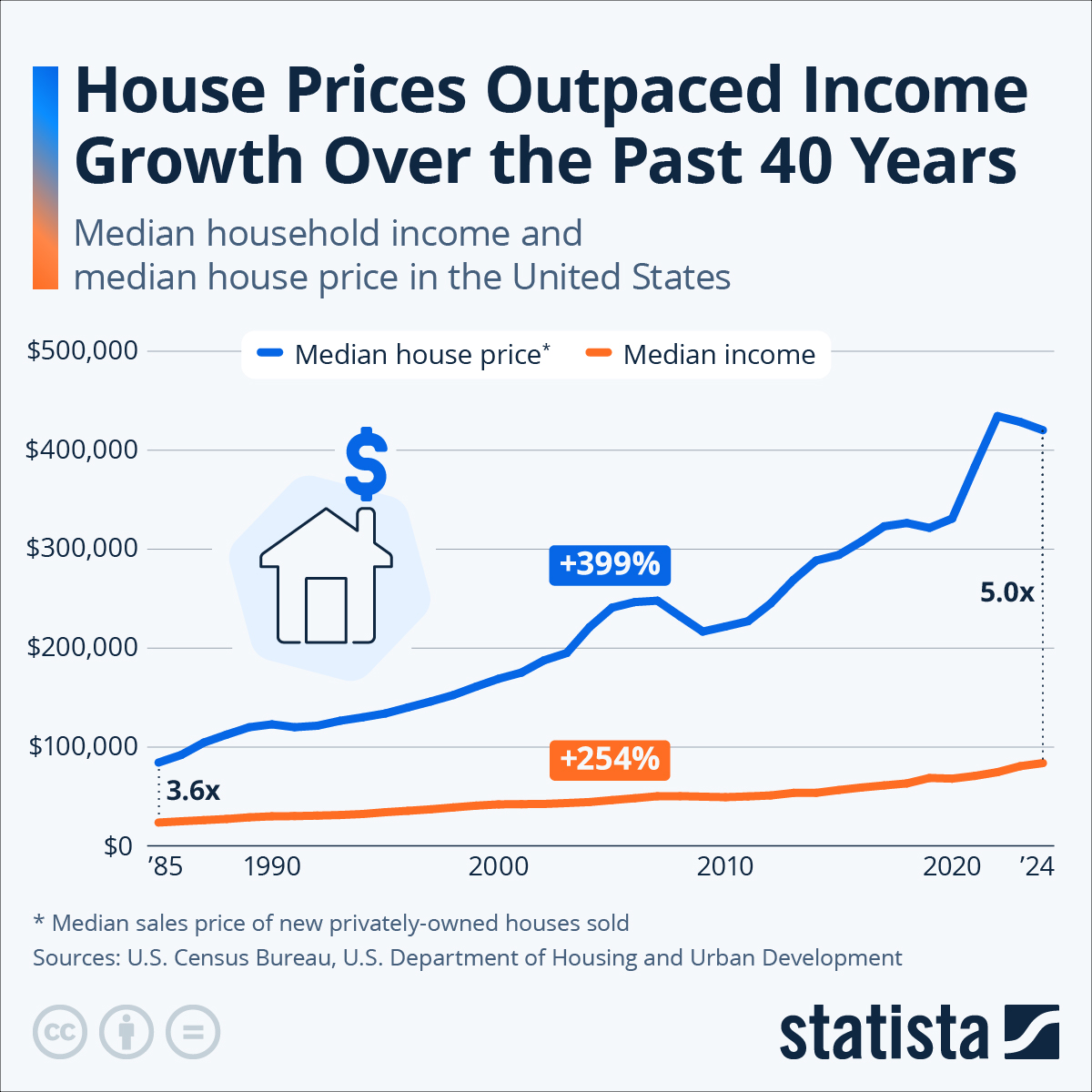
But costs in housing, healthcare, and education have outpaced that growth in many areas.
Still, today’s housing shortage isn’t the worst America has faced. Joseph pointed to 1948, when the crisis was so severe that a young war veteran named John F. Kennedy launched his political career campaigning on affordable housing.
By the mid-1950s, mass construction projects like Levittown had helped solve it.
His takeaway: today’s shortage will get solved the same way, by building more, and in the meantime, monetizing your own space (as earlier generations did with boarders) is one way to get through it.
Round 2: Donate Your Business Idea
Joseph offered a few side hustle ideas for listeners.
- Handyman Work: Skilled handymen are in short supply in many areas and can charge well for weekend and evening work.
- Fractional roles: For people with corporate experience, like accounting or marketing, fractional roles (fractional CFO, fractional CMO) let small business owners access high-level skills part-time.
- Mid-tier pet care: He also sees a gap in the pet care market between neighborhood dog walkers and high-end facilities like Pet Suites.
I mentioned Sniff Spot, which works like Airbnb for backyard dog parks, as an example of someone already filling that white space.
Joseph connected this to demographics: with people having fewer children and having them later, more households are directing time and money toward pets instead.
Round 3: Triple Threat
Marketing Tactic That’s Working
Joseph has found success tying his content to current news cycles. A clip of him discussing inflation on Paula Pant’s ‘Afford Anything’ Podcast took off specifically because inflation was already a hot topic.
His advice: look for ways to connect your business or content to whatever conversation is already happening rather than starting from scratch.
I shared a similar example: a Costco pumpkin pie post that performed well around Thanksgiving by tapping into seasonal interest, and a guest who used AI to pitch journalists different story angles for a diaper bag business, with one AI-crafted pitch finally landing after several human attempts failed.
New or New-to-You Tool You Love
AI note-taking apps. Joseph was dragged into this world reluctantly. Typing during a conversation felt rude, but then he couldn’t remember what people had said.
His wife, who uses Granola, shamed him into running one, and now he doesn’t know how he’d live without it.
Favorite Book in the Last 12 Months
Joseph’s pick for the last 12 months is 1873, a book about the railroad bubble that burst that year.
As a share of GDP, the two largest investment booms in American history have been 1870s railroads and today’s AI buildout.
He’s cautious about drawing too direct a parallel, though. Just because the railroad bubble burst doesn’t mean history will repeat the same way with AI. As he put it, the real lesson of history is “how rarely does it move as fast as you think it does.”
Episode Links
- HistoryHelps.com
- How to Get Rich in American History: 300 Years of Financial Advice That Worked (& Didn’t)
- Sniff Spot
- Good Housekeeping
- Granola
- 1873
- 24 Best Real Estate Side Hustles to Build Wealth and Cash Flow
- Episode 347: Airbnb Experiences: Make Money w/ Your Unique Local Experience
- Episode 292: Free Houses: How to Build a $1 Million Real Estate Portfolio on the Side
- Episode 720: From $50k in Debt to Mortgage-Free Millionaire: How Coast FIRE Led to a 3-Day Workweek
- 14 Side Hustles for Physical Therapists: Clinical and Non-Clinical Ideas
- 726: The $300/day Marketing Funnel: From Content to Cash Flow
- 42 Apps That Pay You Real Money: The Best Money Making Apps of 2026
- Paula Pant’s ‘Afford Anything’ Podcast Episode
- 14 AI-Powered Side Hustles You Can Start Today: How to Make Money with AI
- sidehustlenation.com/deals
Looking for More Side Hustle Help?
- Start Your Free $500 Challenge. My free 5-day email course shows you how to add $500 to your bottom line.
- Join the free Side Hustle Nation Community. The free Facebook group is the best place to connect with other side hustlers and get your questions answered.
- Download The Side Hustle Show. My free podcast shares how to make extra money with actionable weekly episodes.

The award-winning Side Hustle Show is the #1 side hustle podcast
with over 1,300 5-star ratings!

Listen in your favorite podcast app or directly in your browser.