What if you could skip the hardest part of starting a business, the zero-to-one grind, and just buy your way into cash flow instead?
Joe Burrell runs Just Website Brokerage, where he’s helped broker over 300 sales totaling more than $7 million in lifetime value.
He started buying and selling his own online businesses back in 2012 and pivoted to full-time brokering around 2018.
These days he doesn’t run any businesses of his own — his expertise is entirely in guiding buyers and sellers through the deal process.
In this episode, Joe walks through real, live listings on Flippa, breaking down what the numbers mean, what red flags to watch for, and what actually makes a website or online business worth buying.
(Download Joe’s State of Online Business Sales report at justwebsitebrokerage.com/2026!)
Tune in to Episode 761 of the Side Hustle Show to learn:
- how to read a business listing’s profit multiple and decide if the asking price is fair
- the questions to ask before buying a content site, e-commerce store, or SaaS product
- why diversification and a post-purchase plan matter more than the price tag
Get Personalized Side Hustle Ideas
Get Personalized Side Hustle Ideas
Enter your email to get my free AI-Assisted Brainstorming Worksheet now:
You’ll also receive my best side hustle tips and weekly-ish newsletter. Opt-out anytime.
Sponsors
- Quo (formerly OpenPhone) — Try it for free!
- Shopify — Sign up for a $1 per month trial!

- Gusto — Get 3 months free of the leading payroll, benefits, and HR provider for modern small businesses!

- Indeed – Start hiring NOW with a $75 sponsored job credit to upgrade your job post!

- Monarch — Get an extended 30-day free trial!

Where to Shop for an Online Business
Joe pointed to Flippa as the marketplace with the most listings.
Most require you to sign an NDA before you get full access to financials, but you can see enough basic info upfront to decide if it’s worth the extra step.
Flippa lets you filter by budget, business type, revenue, profit, and age.
Joe recommends new buyers keep filters broad at first. As he put it, “the chances of you buying the first thing you look at is very unlikely.”
A few other places to look:
- Empire Flippers – a vetted brokerage with a more selective listing process
- Acquire.com – paid membership required
- Investors.club, Motion Invest, Niche Investor, and Money Nomad – smaller and generally free to browse
How to Read a Listing: The Pest Control Site Example
Joe pulled up pestkill.org, a 13-year-old content site making $675/month in profit at 97% margins, priced at a 2.7x multiple (roughly $22,000).

That multiple means it would take about 2.7 years to earn back your investment if performance holds steady.
The site’s revenue came from AdSense and Amazon Associates, with a visible seasonal spike in spring (pest season).
Joe flagged an easy improvement opportunity: switching from AdSense to a network like Mediavine, Raptive, or Ezoic typically pays more, assuming the site meets their traffic thresholds.
Based on what was publicly visible, Joe estimated the site would likely sell for somewhere between $15,000 and $20,000 rather than the full asking price, since sellers are almost always open to negotiation.
Why “Passive Income” Is a Myth for Bought Businesses
Buying an existing site doesn’t mean you can walk away and collect checks. Joe was blunt: if you buy a site and do nothing with it, “it’s going to suffer for it.”
The most successful buyers come in with a specific plan to improve:
- profit
- traffic
- monetization
So they earn back their investment faster.
Before buying, ask to see Google Analytics and a P&L (profit and loss statement), plus verification like screenshots or a video call walkthrough with the seller.
Also check how concentrated the traffic is — if 3 articles out of 100 drive 90% of visits, that’s a real risk if those rankings ever drop.
Build vs. Buy
So why not just build your own version for less than the asking price?
Joe’s answer was the most convincing argument in the episode. He’s built plenty of sites, and two businesses built almost identically will produce one winner and one dud — with no obvious explanation why.
Buying lets you skip that trial and error entirely. With the pest site, you’re really buying a 13-year-old domain, its backlink profile, and a body of content that already proved it can rank.
A site that old was probably earning a lot more than $675/month at some point, which is worth digging into.
What Diversification Really Means
Joe called diversified revenue and traffic sources the most desirable trait in any business for sale.
A business reliant on one client, one traffic source, or one platform is fragile.
He shared a cautionary tale: a business with huge profits had a signed letter of intent for $4 million, but during the deal process, Google made an algorithm change and wiped out the site’s single traffic source.
“More money does not necessarily mean that the business is secure,” he said.
E-Commerce vs. Content Sites
Joe also reviewed surf-store.com, a 20+ year old water sports e-commerce business based in Slovenia, priced around $83,000 with a 1.4x multiple (about a 1.5-year payback period).
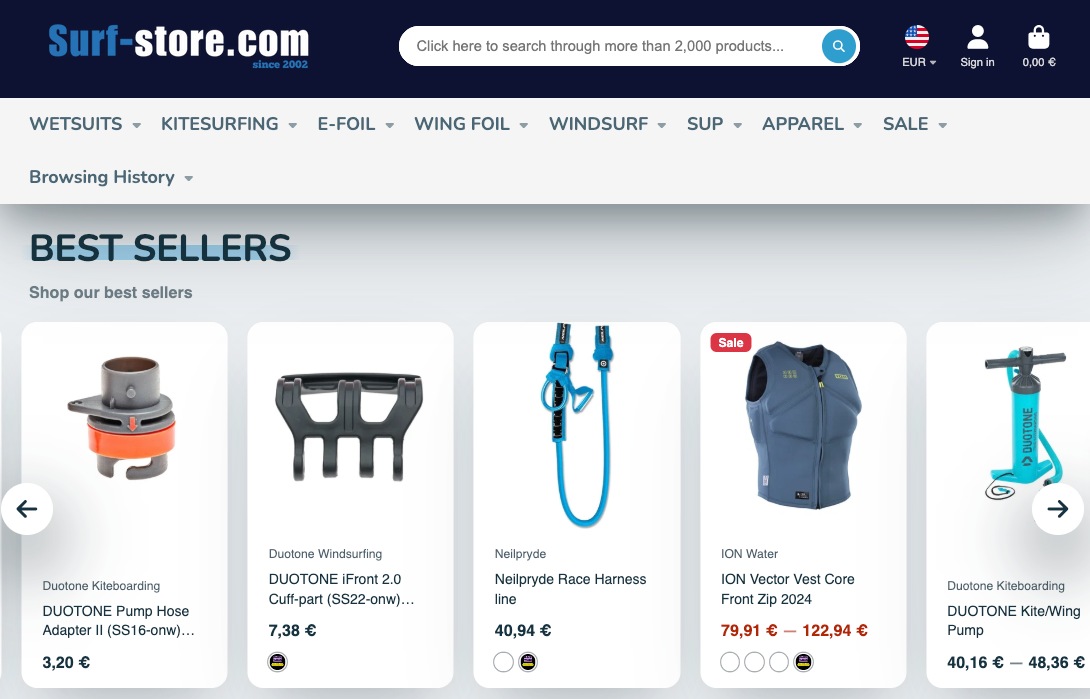
E-commerce sites typically sell for lower multiples than content sites because of the added complexity:
- inventory
- warehousing
- and fulfillment
The listing’s revenue chart hadn’t been updated since January, months before the recording, and the last recorded months showed profit dropping to just $200-$400.
That’s a sign the listing is stale and the seller may not even respond.
Joe recommends always asking for updated numbers rather than trusting an old graph.
Creative Financing: Seller Financing Explained
For deals above roughly $50,000, seller financing becomes more common.
You might pay 50% upfront (say $40,000 on an $80,000 deal), take ownership immediately, then pay off the remaining balance over a period ranging from 3 months to 2 years.
Joe generally doesn’t like terms stretching past 12 months as a seller, and he doesn’t recommend this route for a first-time buyer since the legal terms and default protections get complicated fast.
Profit-share arrangements (paying for a business partly out of its future earnings) do happen, but mostly in bigger deals in the mid-six-figures and up, where sharing a meaningful dollar amount actually makes sense for the seller.
Should You Buy a SaaS Business or Faceless YouTube Channel?
Joe looked at a SaaS listing called AssignmentGPT, a homework-help tool making about $2,000/month, with the asking price cut from $40,000 to $20,000 as revenue trended down.

Its only real cost was about $17/month in OpenAI API fees — it’s essentially a wrapper on ChatGPT.
Joe’s advice: don’t buy something like this unless you have real AI expertise, since the “product” is just a thin layer over someone else’s technology.
He also warned against SaaS businesses that sold lifetime deals, since you inherit the obligation to support those users forever without any new revenue from them.
Faceless YouTube channels are increasingly popular since AI can now generate the video and voice content.
Joe said they can be a good investment, but they carry concentration risk: your income depends entirely on YouTube’s rules, which change often as the platform deals with a flood of AI-generated content.
Mistakes to Avoid
The single biggest mistake Joe sees is buyers purchasing a business and then doing nothing with it.
He once sold a site at nearly a 4 or 5x multiple, and a year later the buyer still hadn’t even switched the monetization accounts over to their own name — Joe was still collecting revenue on a business he no longer owned.
He also recommends getting on a video call with the seller before buying, especially for your first deal.
Building rapport helps you gauge trustworthiness, and skipping this step can create gaps that cause problems if something goes wrong later.
Watch out too for stale listings (revenue graphs that haven’t been updated in months) and sellers who oversell a declining business as “thriving.”
How the Market Has Changed
Back when Joe started, content sites sold for less than 1x annual profit.
Multiples have climbed since then as more traditional investors entered the space, comparing website multiples favorably to something like the S&P 500’s price-to-earnings ratio.
A major shift happened in 2023, when AI-generated answer snippets in search results crushed traffic to small, informational content sites — the “how to mow your lawn” style sites that used to be the bulk of Joe’s clients.
Traffic for surviving content sites now increasingly comes from sources like Pinterest, social media, and virality rather than traditional search.
What’s Next for Joe?
Joe is using AI to relaunch his own website without hiring a developer and to build internal tools for his team — work he says he never would have attempted solo in the past.
He’s watching closely how AI keeps changing what’s possible for buyers and sellers of online businesses.
He’s also put together a State of Online Business Sales report at justwebsitebrokerage.com/2026.
Joe’s #1 Tip for Side Hustle Nation
“The thing that I attribute 90% of my success to is consistently showing up, doing the same thing constantly over and over and over again, and just showing up and doing the work, even when things are a little bit tough.”
Get Personalized Side Hustle Ideas
Enter your email to get my free AI-Assisted Brainstorming Worksheet now:
You’ll also receive my best side hustle tips and weekly-ish newsletter. Opt-out anytime.
Episode Links
- Just Website Brokerage
- Flippa
- Empire Flippers
- Acquire.com
- Investors.club
- Motion Invest
- Niche Investor
- Money Nomad
- Pestkill.org
- Surf-store.com
- AssignmentGPT
- Mediavine
- Raptive
- Ezoic
- State of Online Business Sales Report
- Side Hustle Nation Deals
Looking for More Side Hustle Help?
- Start Your Free $500 Challenge. My free 5-day email course shows you how to add $500 to your bottom line.
- Join the free Side Hustle Nation Community. The free Facebook group is the best place to connect with other side hustlers and get your questions answered.
- Download The Side Hustle Show. My free podcast shares how to make extra money with actionable weekly episodes.

The award-winning Side Hustle Show is the #1 side hustle podcast
with over 1,300 5-star ratings!

Listen in your favorite podcast app or directly in your browser.